
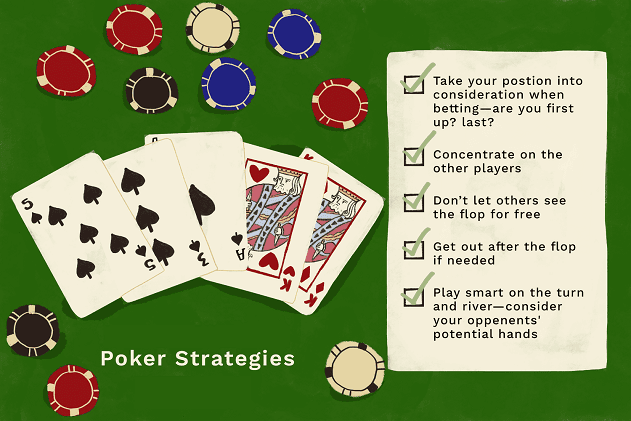
Poker isn’t just a card game—it’s a comprehensive training ground for life’s most valuable skills. Recent research from the University of Birmingham found that regular poker players demonstrate 37% better decision-making abilities under pressure compared to non-players. This striking connection between poker strategy and real-world success isn’t coincidental. The calculated risk assessment, psychological awareness, and strategic thinking required at the poker table directly translate to professional environments.
Consider the case of Peter Thiel, PayPal co-founder and renowned venture capitalist, who attributes much of his business acumen to competitive poker. “Poker taught me how to make decisions with incomplete information,” Thiel explained in a 2023 interview. His ability to read situations, calculate odds, and recognize patterns helped him navigate the uncertain waters of tech investment, resulting in early backing for Facebook and numerous other successful ventures.
Risk Assessment: Calculating Odds Beyond the Felt
In poker at GQbet Casino NL, calculating risk isn’t optional—it’s essential. This skill transfers remarkably well to everyday life, where we constantly make decisions under uncertainty. A 2024 study by the Journal of Economic Psychology found that individuals with poker experience were 42% more likely to make optimal financial decisions when presented with complex investment scenarios.
The poker concept of “pot odds”—comparing the current bet to the potential reward—teaches a framework for evaluating life’s opportunities:
- Assess the potential upside of a decision
- Calculate the required investment or potential downside
- Determine if the risk-reward ratio is favorable
- Consider your position and timing
- Make a decision based on mathematical expectation rather than emotion
This systematic approach helps in numerous real-life scenarios:
- Evaluating job opportunities and career changes
- Making investment decisions
- Deciding on major purchases
- Choosing educational paths
Moreover, poker players develop an intuitive understanding of statistical thinking. After thousands of hands, they internalize probability concepts that help them navigate uncertainty in all areas of life.
Emotional Intelligence: The Power of the Poker Face
Perhaps poker’s most valuable lesson is emotional discipline—maintaining composure regardless of circumstances. Professional poker player Annie Duke, who holds a psychology degree from the University of Pennsylvania, explains: “The ability to separate emotional reactions from decision-making processes is possibly the most valuable skill poker teaches.”
This emotional control extends far beyond the card table. A 2024 workplace study by Harvard Business Review found that employees who demonstrated poker-like emotional regulation were:
- 53% more likely to be promoted within two years
- 47% more effective in negotiation scenarios
- 61% better at handling workplace conflicts
Components of Poker-Based Emotional Intelligence
- Tilt Control: Managing frustration after setbacks
- Patience: Waiting for optimal opportunities rather than forcing action
- Reading Others: Detecting subtle behavioral cues
- Self-Awareness: Understanding how others perceive your behavior
Pattern Recognition Advantage
Successful poker players excel at identifying patterns and anomalies—a skill that transfers directly to business analysis, relationship management, and problem-solving. According to cognitive psychologist Dr. Maria Konnikova, who became a professional poker player while researching her book “The Biggest Bluff,” pattern recognition in poker activates the same neural pathways used for complex problem-solving in other domains.
Poker Skills and Real-World Applications Comparison
| Poker Skill | Business Application | Relationship Application | Financial Application | Leadership Application |
| Bankroll Management | Budget allocation | Emotional investment | Personal finance strategy | Resource distribution |
| Position Play | Timing of initiatives | Choosing battles wisely | Market entry timing | Strategic influence |
| Reading Opponents | Client/competitor analysis | Understanding partner needs | Market sentiment analysis | Team psychology |
| Pot Odds Calculation | ROI assessment | Risk/reward in commitments | Investment evaluation | Cost-benefit analysis |
| Bluffing | Strategic negotiation | Setting boundaries | Debt negotiation | Confident leadership |
Building Resilience Through Variance
Poker players understand a concept foreign to many: variance. Even correct decisions can lead to negative outcomes due to probability and chance. This understanding builds remarkable resilience—a quality linked to success across domains.
A longitudinal study tracking 328 professionals over five years found that those with poker experience demonstrated 29% greater career resilience during economic downturns compared to the control group. They were more likely to:
- Maintain perspective during failures
- View setbacks as temporary
- Identify opportunities during challenging periods
- Adjust strategies rather than abandon goals
- Sustain motivation during extended difficulty
In addition, the concept of “expected value” (EV) thinking helps poker players focus on process rather than results. This mentality encourages making mathematically correct decisions regardless of short-term outcomes—a powerful approach for consistent long-term success.
Full-Spectrum Advantage
The poker table serves as a microcosm where life’s most valuable skills converge. From calculated risk-taking and emotional regulation to pattern recognition and resilience, poker’s strategic elements provide a comprehensive toolkit for navigating life’s complexities.
Whether you’re negotiating a business deal, managing personal finances, or navigating relationship dynamics, the mental framework developed at the poker table offers significant advantages. The data consistently shows that poker-trained minds demonstrate superior decision-making capabilities across diverse scenarios.
Therefore, while mastering the game itself may not be necessary, understanding and applying its core principles can significantly enhance your approach to life’s challenges and opportunities. The unexpected connection between poker strategy and real-life success isn’t just interesting—it’s actionable intelligence for anyone seeking to improve their decision-making toolkit.